
Fourteen civil society organisations from Manipur have urged the Centre to update the National Register of Citizens (NRC) in the state before the completion of Census 2027. They argue this is essential to address concerns over demographic changes and alleged illegal immigration from Myanmar, which they believe has altered the state's population profile.

Chief Secretary Atal Dulloo announced that the Census 2027 will be a fully digital and paperless exercise, utilising mobile technology, AI, and cloud computing for accuracy and efficiency, marking a shift towards data-driven governance.

In addition to caste details, the Census will, for the first time, collect personal information such as the total number of bank accounts held by individuals, along with their mobile number, Aadhaar number, voter ID number, passport number and driving licence status, according to the 40 questions notified by the Registrar General of India on Friday.
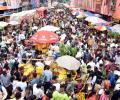
Odisha and Uttar Pradesh are among the first to roll out the digital exercise.

Over 93,000 individuals in Delhi have participated in the self-enumeration exercise for Census 2027, with North East, South West, and North West Delhi districts leading in registrations. The initiative, part of a broader census effort, allows residents to submit household details online, contributing to the overall data collection process.

The Centre has notified 40 questions for the upcoming Census 2027, including caste and place of Covid vaccination, marking the first time caste details will be collected as part of the decadal exercise. The population enumeration will be a fully digital process, with an option for self-enumeration.
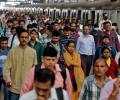
The Census 2027 will be conducted in two phases, the first between April and September 2026 and the second in February 2027, the Lok Sabha was informed on Tuesday.
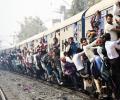
The 2027 Census may cost a bit more due to the proposed use of apps and smartphones by the 3.4 million enumerators who will collect comprehensive data much more efficiently than in earlier times.
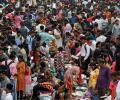
'There will be not less than 31 lakh people working in the census process.'

Opposition leaders have questioned how caste responses will be recorded without state-wise pre-prepared lists.

A coalition of 14 Meitei civil society organisations in Manipur has urged Governor Ajay Kumar Bhalla to implement a National Register of Citizens before the 2027 Census, arguing it is crucial for resolving the state's ongoing ethnic conflict and identifying 'illegal migrants'.
India has launched digital tools for its upcoming fully digital Census 2027, including mobile apps and a self-enumeration portal, aiming for efficient and accurate data collection.
Police in Thane, Maharashtra, have filed an FIR against two government employees assigned census work for alleged dereliction of duty. The employees, a clerk and a compounder, failed to report to their designated office and refused to initiate assigned tasks for the Census 2027, despite repeated contact from higher authorities.
A resident of Bengaluru has been booked for allegedly obstructing and verbally abusing female officials engaged in the National Census-2027 work. The incident occurred in Ward No 43, R T Nagar area, between April 20 and April 25. The accused refused to provide census information and verbally abused the officials. A case has been registered under relevant sections of the Bharatiya Nyaya Sanhita, and investigations are ongoing.

Amidst ongoing ethnic tensions, a new political alignment in Manipur sees Meitei and Naga groups uniting to demand an update to the National Register of Citizens with a 1951 base year, a move fiercely opposed by Kuki-Zo communities who fear it will disenfranchise them.

The Union government has deferred census operations in Manipur, originally scheduled to begin on September 1, following persistent demands from civil society organisations for the implementation of the National Register of Citizens (NRC) to address concerns about demographic changes due to alleged illegal immigration.

2027's housing census trims questions but adds digital-age indicators like Internet and smartphones.
Population Foundation of India welcomes the digitisation of the Census but emphasises the need for inclusivity, data security, and addressing the under-reporting of women's contributions.

The Union Cabinet on Friday approved Rs 11,718 crore for conducting the Census of India, 2027, which would include the caste enumeration for the first time.

'They want to sabotage the caste census and bury Muslim backward classes, Hindu backward classes, Sikh backward classes and Buddhist backward classes.'

Authorities in Delhi have implemented a QR code-based verification system for census enumerators and supervisors to combat rising cyber fraud cases involving impersonation and fake government officials during the Census 2027.

The census will be carried out with a reference date of October 1, 2026 in snow-bound areas like Ladakh and March 1, 2027 in the rest of the country, the notification said.

This will be India's 16th Census and the eighth since Independence. For the first time, citizens will also have the option of self-enumeration.

The Indian government has released the list of questions to be asked during the first phase of the Census 2027, focusing on houselisting and housing enumeration. The survey will cover various aspects of housing conditions, household characteristics, and access to basic amenities.
The next Census' findings will help identify the extent of India's ageing population and vulnerability levels.

'Once the numbers come out, they fear that the OBCs would start to demand, and articulate what they are lacking, why they are lacking and what should be done to go forward.'

SBSP chief Om Prakash Rajbhar has revived the long-standing discussion about dividing Uttar Pradesh, claiming Prime Minister Narendra Modi assured him the state could be split into four parts after a caste census. Rajbhar's statement, made at a rally in Deoria, links the division to the 27% reservation issue and suggests a Rajbhar could become chief minister of a new Purvanchal state. The demand for UP's division has historical precedents, notably from former Chief Minister Mayawati.
'What is going on is the under counting of the migration population in urban areas.' 'It has been going on in the last few censuses.'

The NDA government has gradually nuanced its position on the issue of demographic challenge.

The Registrar General and Census Commissioner of India, Mritunjay Kumar Narayan, has reassured the public that individual data collected during the upcoming census will remain confidential and cannot be used for any purpose other than statistical aggregation.
Census exercise with caste enumeration will be carried out with the reference date of October 1, 2026, in snow-bound areas like Ladakh and of March 1, 2027, in the rest of the country, the Home Ministry announced on Wednesday.

A special dedicated web portal will be launched for self-enumeration during the upcoming Census, which will be available for both phases of the national enumeration exercise, officials said Monday.

Sonia Gandhi criticises the government's proposed delimitation, claiming it's a politically motivated move to delay the caste census and gain an unfair advantage, rather than genuinely promoting women's reservation.

Shah has firmly stated that providing reservation to Muslims based on religion is unconstitutional, while also confirming that a caste census will proceed alongside the population enumeration.

The Indian government is reportedly developing new proposals to increase Lok Sabha seats by 50 per cent across all states. This initiative aims to address concerns from southern states regarding potential political power reduction due to population-based delimitation, while also facilitating the operationalisation of the women's quota law before the 2029 Lok Sabha elections.

The Centre has notified the implementation of the Women's Reservation Act 2023, providing a 33 per cent quota for women in legislatures, Jammu and Kashmir, and Union Territories, with the provisions set to come into force on April 17, 2026.

Congress leader Shashi Tharoor criticised the proposal to increase the Lok Sabha's strength to 850, while BJP leaders defended delimitation as a democratic necessity at the Stanford India Conference 2026.

A bill to implement 33 per cent reservation for women in Lok Sabha and state assemblies by increasing the lower house's strength to 850 is slated for introduction in Parliament. The bill seeks to amend Article 81 of the Constitution and utilise 2011 Census data for redrawing constituencies.

'The reason why they rushed through the bill was they wanted to avoid using the 2026 Census because the 2026 Census by their own decision will be a caste census.' 'The BJP knows that a significant share of the OBCs who will get captured in the census, for the first time after the 1931 Census, are against the BJP. Only a segment of the OBCs are in their favour.' 'So they wanted to avoid the OBC reservation among women, which is a demand of a lot of Opposition parties.'

Prime Minister Narendra Modi is advocating for the implementation of the Women's Reservation Act by the 2029 Lok Sabha elections and Assembly elections, urging all members of Parliament to support amendments to the Nari Shakti Vandan Adhiniyam during a special session.
